-
Qerani
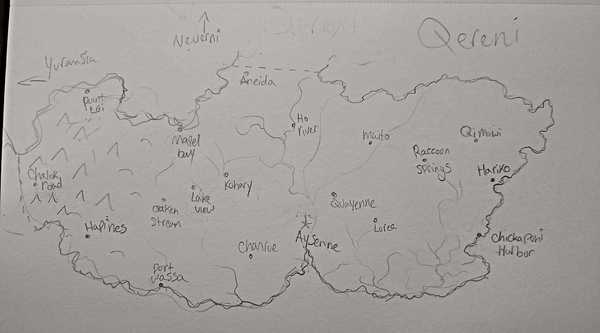
A temperate climate attached to the Asiq Continent. It borders south of Neverni and southeast of the Yuransic pennisula. Qereni is the agriculural country of the northern hemisphere, exporting mass amounts of rice, poultry, fish, fruits, nuts, and is a top expy of lumber.
Qereni is a country with two major regions, each with very different cultures and geography.
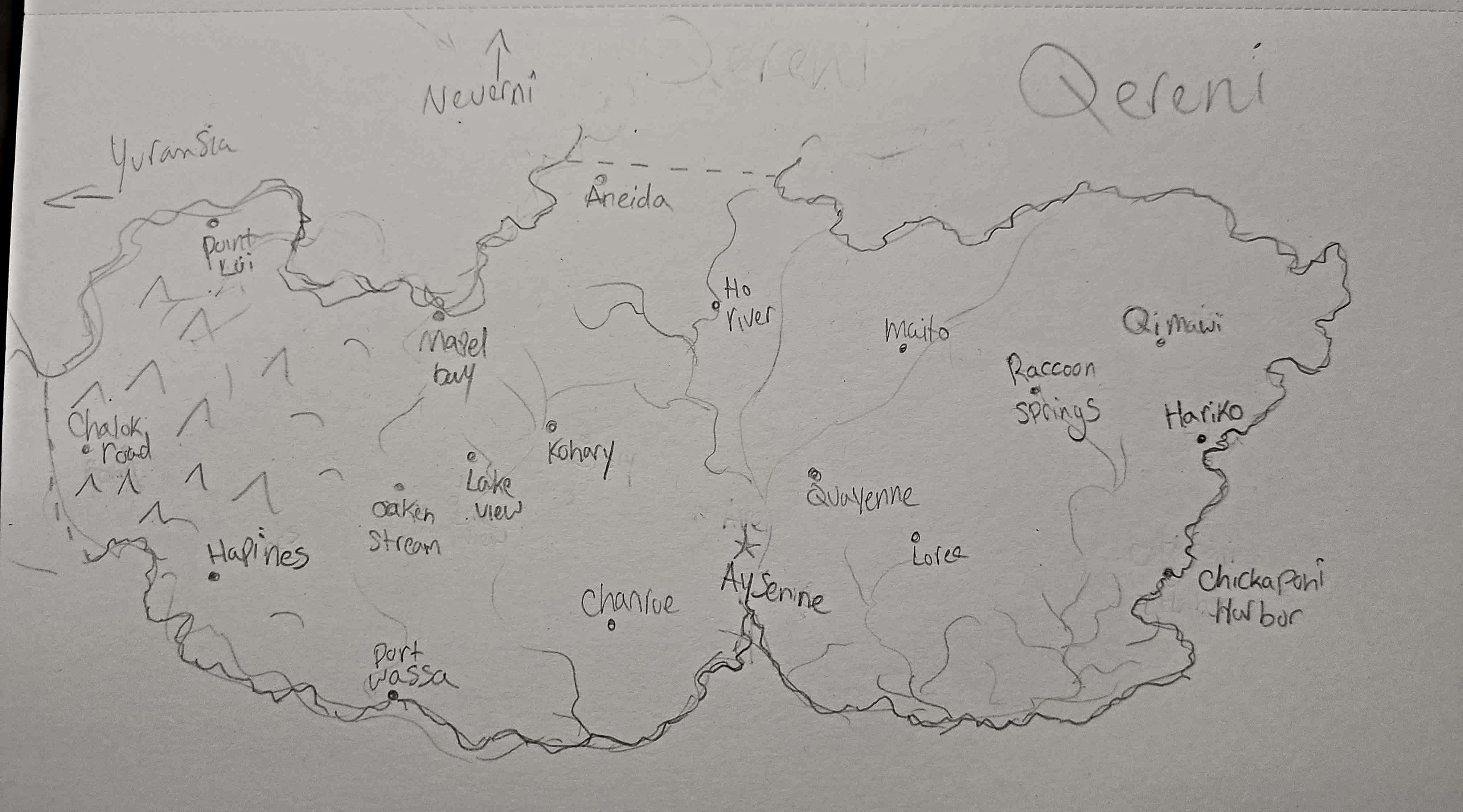
Eastern Qereni is culutrally dominant in Native Qereni culture, comprising mainly of rich farmlands, marshes, and plains. East Qereni is the agricultural center of the country, with food production, management, and agriculture being the top employer in the country. Qerenian food is well regarded all across the world, with some of the best Chefs originating from there.
Western Qereni, also referred to as Modern Qereni, is more culturally diverse. This side of the country, bordering the Yuransic pennesula, is populated with dense forests, rolling hills, and mountains to the northwest, and sprawling mesas to the southwest. Western Qereni is the trade center of the country, having heavy focus on lumber production, architecture, and modern development.
There is a lot of variety in Qerenian culture. With their open border policy, Qereni has one of the largest immigration rates in the whole world. However, as much as Qerenians try to value peace and openness, the spike in immigrants over the last couple decades has thrown the country into economic and social imbalance.
Qerani
A temperate climate attached to the Asiq Continent. It borders south of Neverni and southeast of the Yuransic pennisula. Qereni is the agriculural country of the northern hemisphere, exporting mass amounts of rice, poultry, fish, fruits, nuts, and is a top expy of lumber.
Qereni is a country with two major regions, each with very different cultures and geography.
Eastern Qereni is culutrally dominant in Native Qereni culture, comprising mainly of rich farmlands, marshes, and plains. East Qereni is the agricultural center of the country, with food production, management, and agriculture being the top employer in the country. Qerenian food is well regarded all across the world, with some of the best Chefs originating from there.
Western Qereni, also referred to as Modern Qereni, is more culturally diverse. This side of the country, bordering the Yuransic pennesula, is populated with dense forests, rolling hills, and mountains to the northwest, and sprawling mesas to the southwest. Western Qereni is the trade center of the country, having heavy focus on lumber production, architecture, and modern development.
There is a lot of variety in Qerenian culture. With their open border policy, Qereni has one of the largest immigration rates in the whole world. However, as much as Qerenians try to value peace and openness, the spike in immigrants over the last couple decades has thrown the country into economic and social imbalance.
Kéryahnii
Terra
190 million as of yr3045
Monarch
Council of Leaders
Unions (and reps)
Houses
the Quoi, traditionally a green-blue federal note, backed by the Turquoise stone. It is printed with the image of the current monarch within the symbol of the rising sun.
Baseball, which originated from Tu'leren
1.03 million sqaure miles (Ranked #6 in size)
Corn, lumber, wild rice
Warm temperate climate throughout most of the country, excluding the mesas surronding Port Wassa, which is a much warmer temperate climate.
The stories say the great country of Qereni was formed when a mass migration of war refugees fled from Su-Riteniai, Geru, and Hattania during times of great war roughly 300 years ago. These refugees departed from North Geru to Hattainia, and then west, landing on the east Coast of Qereni. The nearly thousand refugees, many of which were sick, were not initially taken in kindly by the Qereni natives. Langauge barriers, cultural differences, and the sheer number of these refugees seeming more like a invasion to the Qereni natives.
Tensions rose between these communities, and the refugees, with no where else to go, were prepared to go to war for their survival. It was six long months of these communities being locked in a tense a cold war over resources before violence began to break out. A few minor skirmishes was all it took to trigger a war.
Folk tales and actual historical records deviate from here. Folk tales speak of the morning of the first battle. As both cultures formed their lines on the battlefield, two adolescent girls broke from their respective lines and tearfully embraced as the sun rose. Both cultures, sharing a reverence for the sun, were touched by the act. Folk tales say that the two girls had made a pact of sisterhood.
In actually, many mothers, youth, and children had been collaborating cross-culturally sharing techniques, cultures, and languages. There was a silent majority of people who did not want things to escalate to war. Although the act of sisterhood did happen, it was actually the mingling of cultures behind the scenes that brought the two communities together. Additionally, recent sources have confirmed that the two adolescent girls did not form a bond of sisterhood, but were actually lovers.
Regardless of the details, both sides realized that peace could be achieved without spilling blood, due to the thoughtful consideration and delegation of the mothers. Due to this, men took a step back from some leading roles in the peace talks- a action that caused a massive cultural shift to this day. The immigrant peoples began moving farther west, peacefully migrating thorugh the tribal lands, settling in the unhabited forests of the west.
But I those forests weren't be uninhabited. The Eastern natives, to avoid the war, promised the desperate settlers land that was not theirs to give. The settlers drove the western natives from their land, driving them into the mountainous wasteland of Yuransia or being completely destroyed all together. Both sides, the settlers and Eastern natives slowly began to omit the truth of how they gained the western land, the western natives being essentially erased from history.
2824
The War of Peace (The foundational war), The Two-faced War, The Jytan-Qerenian war of 2987
View Full Gallery Experience
Check out our newly designed gallery page with larger images, lightbox viewing, and an overview section – perfect for sharing with others!
This country was created by Conferva on Notebook.ai.
See more from ConfervaCreate your own universe