-
Murias
The Kingdom of Autumn
Murias
The Kingdom of Autumn
The Kingdom of Fall
Pockets of dense population are scattered throughout Murias, particularly in the capital and the many rivers that run through the southern portion of the Kingdom from the mountains to the sea. The northern region is less populated, but there is a tradeline to some settlements that runs along the coast, stopping short of Findius’ border; there’s some land set aside for farming, but the colder climate means there’s only a select kinds of crops that can grow.
Overall, the population in Murias is roughly over a million.
Barriers and other restrictions based on gender aren’t really prominent in Murias, nor are there ones for sexual orientations; it’s the affinity and seasonal affiliation of a person that can become a problem if you aren’t of Autumn. Discrimination of that kind isn’t outright or violent, usually, but it can get you blackballed hard in certain circles. At the same time, however, it’s easy for people to disappear in Murias. Race has a little less prominence, since again affinity is king, but people are a little more wary of a race that isn’t common in Murias.
Religion and how it factors is dependent on the region, but it’s typically a more private affair between individuals and their families. Most have private altars and offerings in their homes, but there are those that show their devotion through iconography in tapestries, architecture, and in the mosaics around the capitol. There is an aestheticism to religion that Murias appreciates, and so it varies as being neutral to one’s social standing or elevating it. You could say that it’s a matter of how it is framed that is important.
As said, Murias is all about that aesthetic, so physical appearance and attractiveness is high on their list, even if it is pretty tertiary in terms of social class. Glamours are in, whether they change just one physical trait like hair or eye color. Looking younger or older could benefit you in different ways. Do you just want it to look like there’s some birds nesting in your hair? It’s better than the alternative of live ones, that’s for sure. Some people even use them to change their whole appearance, toe to tip. Whatever meets the beauty standards of Murias. With that in mind, there’s also a bit of a counterculture with these glamours that goes a bit hard in the opposite direction, where the more “monstrous” you look, the better.
Murias breeds a bit of a workaholic culture, especially academically, no surprise there. Physical and mental health can be put on the backburner the higher you go and more responsibilities that get piled on.
In this regard, marriage usually happens in one of two ways: (1) you find and marry someone that works in the same field as you due to proximity, or (2) your parents arrange the marriage. Typically, it’s based on one’s social class and a union of two families. The ceremony and all the details can be pretty elaborate. Having a child is then expected and while the parents are expected to be involved, raising that child is something the family does. But typically it’s the grandparents that have a lot of influence.
Coming of age ceremonies vary, but there’s some commonalities to be found. When an adolescent comes of age, there’s typically a ritual that takes place in the family’s private altar, to honor their duty to the family’s chosen god or goddess and filial piety, and then there’s a feast that takes place outdoors; family and neighbors are invited. It’s a big ol’ to-do.
Age tends to equal experience and knowledge, so elders are valued and given accommodations and accolades, but it’s up to the family to take care of them. If they are unable or unwilling, it’s not uncommon for close friends to take them in. It’s still a bit frowned upon, because family matters in Murias are, well, family matters. That then becomes a question of why your family was unable to help you.
Education is available to most, although that’s not to say that one’s social class isn’t a factor; the more education you have, the better opportunities and pay you can generally expect. Scholars and archivists are the big money makers, with those that go on expeditions being a great honor. Enchanter, alchemists, navigators, and other occupations are also highly valued. Farmers, soldiers, and traders are less so; but that’s a matter of prestige based on the values of Murias.
Dream Smoke. The colloquial term for a mix of magic and herbs indigenous to Murias that is often smoked in pipes; the main ingredient comes from Mimpi flowers that grow alongside rivers, which means it’s fairly common. Typically smoked in the evening, the effect of the smoke is said to affect what you dream — an old childhood memory, love and pleasure, or some sort of power fantasy. It’s highly recommended to not mix Dream Smoke with a caffeine like tea, as it can have rather… unpleasant effects. Nightmares, mostly, but some seem to think they’re ill omens rather than a bad trip.
This varies, of course, but music in Murias is typically favored the more complex and — to put it frankly — loud it is. Woodwinds and drums and violins; orchestra is more popular than opera because even the most talented of sopranos can be drowned out with an entire orchestra fighting for dominance.
But if that’s not your taste, it’s not uncommon for people to exchange verses in song, much akin to flyting or making a medley on the fly. Sometimes the verses are original, other times borrowed from poems and other songs.
While definitely not the smartest of the Kingdoms, Murias does still highly value education. Reading, writing, and arithmetic are the basics that all children learn and pursuing higher education is common. Of course, not everyone is a scholar, but it’s a highly coveted yet not exactly cushy position; Murias loves expedition and discovery, so this by no means a sedentary position. Astronomy is a passion of theirs, but so is alchemy and aesthetic changes like glamours ‘n such are unparalleled, in large part to the latter being a speciality of Lune affinity.
Access to education, beyond the baseline, is determined based on one’s social class. Prominent families will have an easier time helping their children pursue such a passion, although there are sometimes random lotteries for scholarships that give those less able an “equal” chance.
Leafless, dormant trees that are hollowed out to feature den-like structures are commonplace and cozy as hell. There’s not much in the way of windows or other ways that allow natural light in, which sometimes suits the more nocturnal magical creatures. The doors leading to such residencies are often big indicators of one’s class, lineage, education, and general self-expression; this is based on such things as detailed carvings, type of wood used, more vibrant colors are in fashion as of late, etc.
Larger cities, especially the likes of the capitol of Muria, are a mix of these tree dens, treehouse structures camouflaged in the trees that have leaves, and more traditional wooden buildings. The streets are cobblestone, with a mix of mosaics that are well maintained because aesthetic. But honestly, they’re also helpful for getting your bearings since the city can be a bit of a maze to those unfamiliar with it. The castle itself is home not only to its seat of power, but an extensive and rather exclusive library along with an observatory.
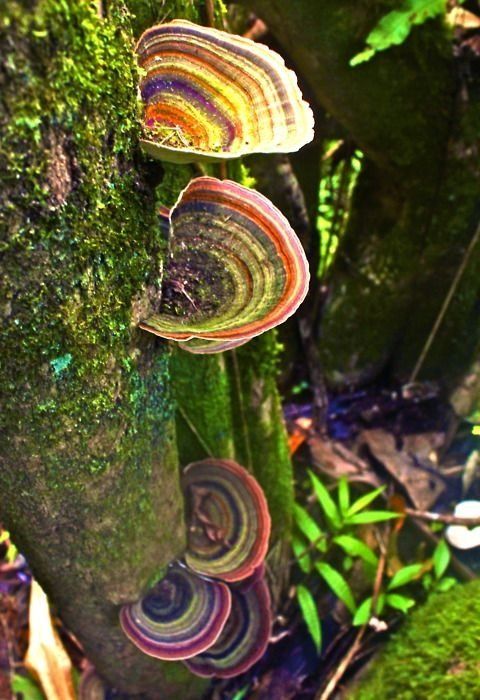
The lightsource in Murias’ cities is typically bioluminescent, from large mushrooms that grow on most structures, well maintained for generations, that give off a gentle but prominent glow at night. Starflies, a fuzzy and cat-sized insect, are kept around for much the same purpose; attracted by sweet scents and naturally docile, they are fairly easy to domesticate and become flighty lil light bulbs attached to some twine. Their bioluminescence runs so deep that even their blood glows.
Archery, fishing and sailing close to the coast, orienteering, various competitions involving logic puzzles, riddles, and mathematics.
Murias is the third largest Kingdom in terms of landmass.
Truffles and other mushroom variants, chestnuts, acorns which are often ground into flour, persimmons, tubers like potatoes, yams, and carrots; wood, seafood is more popular along the coastal areas; various fragrances that can help you sleep and give you different kinds of dreams, depending on the type.
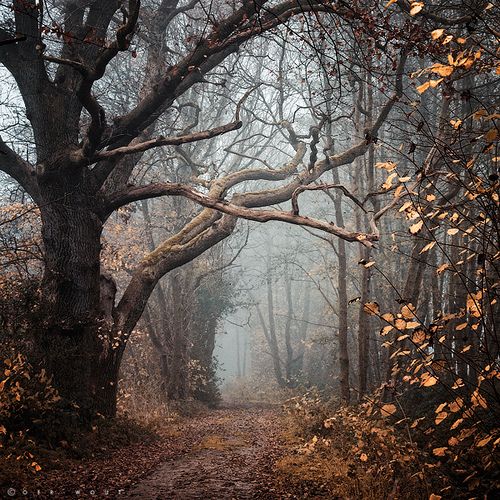
Temperate deciduous forest. The summers are warm and humid, but give way to crisp and chilly winters. Thunderstorms are common, which often makes the terrain muddy and can cause landslides. It’s also very foggy in Murias, which works to the benefit to protect the Kingdom from incoming invaders in tandem with a more hill-y terrain in the southern portion.
As the Autumn tribe was the first to reach the shores of Ispera and claim their Seat of Power, there’s a level of pride and entitlement their monarchy feels towards the rest of the Kingdoms. But they’ve never had the strength and power to claim that right; as the other Kingdoms found their Seats of Power and wars had over borders, the newly founded Murias found themselves in a familiar position that caused them to leave the Isle of Lore in the first place. They were not warriors, but they knew they would not find another place like Ispera across the waves again.
So they played to their strengths when conflicts arose; they used the muddy terrain and hard to navigate fog to trick and confuse invaders, along with the twisting mazes of trees. Eventually they built their homes into those same trees as a means of security. It was only much, much later it became both practical and fashionable.
Sadly, they would not remember that worked both ways when they tried to invade Findius on occasion, as the Winter creatures were just as adept to their environment.
With the fragile security this allowed for them, they developed their love of arts and academia. Much of Murias’ royal court is made up of those who can trace their ancestry back to the first discoverers of Ispera, but also a great deal of scholars and advisors.
It was their eventual alliance with Gorias that changed everything and allowed them a chance to have some equal standing; not on their own, but together. There was some dissent among the court at the time this move was made, but the decision was made swiftly and with such assurance that they, too, saw the light.
When the plague started to ravage Ispera and Gorias made the motion to banish the people of Findius, Murias was one of the first to support them in this decision. Part of it was due to their now age-old alliance, always ready to back the other up in times of conflict, but another part of it was their hatred of Findius. That carried through generations; even the most docile of kings and queens were brought up to never show sympathy for those of the Winter Kingdom.
Ancient times
Murias has a long memory and grudge towards Findius, so it’s no surprise that they’ve had some rows. Of note are border skirmishes along the northern part of the Findius-Murias border, pushing back Murias’ attempts to encroach along the coastline area, bringing the trade route built there to dead stop once you reach the border.
While Gorias and Murias have had their fair share of disputes prior to their alliance, the most notable was during the era when the Church of Sol wasn’t always so tolerant and their influence in the Summer Kingdom made them turn their ire towards Autumn. Like all wars, it was long and it wasn’t pretty, but it eventually ended due to strain on resources and, most likely, a fear that the other Kingdoms would pounce upon them in their weakened state.
With Falias being blocked by two Kingdoms and not particularly interested in trade, Murias has had no real wars with Falias, although they do covet the exclusivity of their wares. When Cosmos was on the throne, however, and whispers about her being a Findius symapthizer were rampant, let’s just say there were a lot of metaphorical rude gestures and glares being thrown from across the ways, but it was never outright war.
View Full Gallery Experience
Check out our newly designed gallery page with larger images, lightbox viewing, and an overview section – perfect for sharing with others!