-
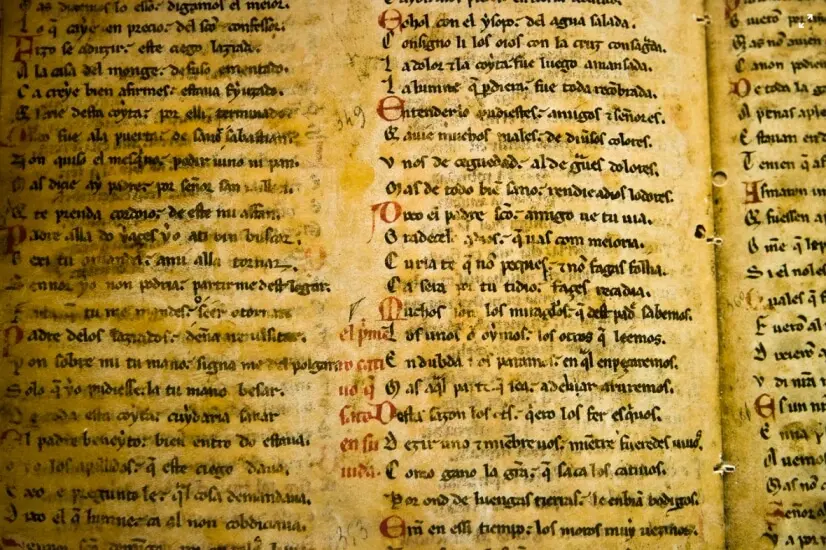
Reika Codex
A philosophical text in the form of a code that outlines proper living, class standards, and manners in Orikan society. While the text predates the modern Orikan Imperium, it is still circulated as a philosophical work that paints a specific picture of good citizenship.
It is a mix of philosophy and treatise on proper hierarchical expression: such as a detailed outline of the Orikan Kariyū facial tattoo system.
Reika Codex
A philosophical text in the form of a code that outlines proper living, class standards, and manners in Orikan society. While the text predates the modern Orikan Imperium, it is still circulated as a philosophical work that paints a specific picture of good citizenship.
It is a mix of philosophy and treatise on proper hierarchical expression: such as a detailed outline of the Orikan Kariyū facial tattoo system.
Codex
Varikan Philosophy Excerpt
The land of Anocica has long been the rightful property of the Orikan people. As descendants of the great philosopher Varik, it is our duty to uphold the traditions and values that have sustained our peoples for centuries. Among these, the most important is the pursuit of moral excellence and the cultivation of virtue.
In Varikan philosophy, the highest goal in life is to become a perfect citizen, one who serves the community with selflessness and devotion. This is achieved through hard work, dedication, and a constant striving for personal improvement. Only by following this path can one hope to earn the respect and admiration of others, and to secure a place of honor in the annals of history. Everything shy of this accomplishment is a fate worse than death: it is to be forgotten.
However, the road to moral excellence is not without its challenges and temptations. The path is fraught with obstacles, and one must be vigilant in avoiding shame and embarrassment. For a true Varikan, there can be no greater failure than to bring dishonor upon oneself, one's clan, or one's family. The stain of such disgrace can never be erased, and one's name will be forever remembered with shame.
Therefore, it is important to remain steadfast in one's commitment to virtue, even in the face of adversity. When faced with difficult choices, one must always choose the path of righteousness, even if it means sacrificing personal desires and interests. This is the hallmark of a true Varikan, one who is willing to put the needs of the community before their own.
In Orik, our proud heritage and cultural traditions are closely tied to the teachings of Varik. It is our duty to ensure that these traditions are passed down to future generations, so that they too may continue to live lives of moral excellence and service to the community. The good of Anocica depends on the indominable spirit of the Orikan people.
In this sense, the pursuit of virtue is not simply an individual pursuit, but a collective one. We are all connected, and our actions and choices have an impact on those around us. By striving for personal excellence and serving the community, we help to create a better world for all, and to secure a brighter future for the Orikan people.
In conclusion, the Varikan path of moral excellence is a lifelong journey, one that requires constant effort and dedication. Through hard work and selflessness, we can become good citizens, earn the respect of others, and secure a place of honor in the annals of history. Let us all strive to uphold these values, so that the Orikan people may once again flourish in the promised land of Anocica for generations to come.
Riyu Code Overview by Whittam ese Royal Translators
A Proper Heirarchy
Riyu refers to the initial linear horizontal face tattoo along the right cheekbone given to a true Orikan. Riyu are given to an Orikan child on their 5th birthday.
Kariyu are smaller, linear, honorific tattoos that stretch vertically down the cheekbone, originating/intersecting at the Riyu. Kariyu are symbols of honor or identity and are ceremoniously added to commemorate acts of valor, promotions of class, scholarship, or noteworthy achievement. There are usually up to 5-6 Kariyu tattooed along a single Riyu line. Most Orikans will have at least 3 Clan Kariyu to designate clan, family, and birth-order. If one runs out of space on their Riyu, additional Riyus (called Dairiyu) can be added on the opposite cheekbone, or lower on the cheek/face as needed (although such cases are rare and usually shows of power for the elite). There are two primary types of Kariyu: "Upper" Kariyu, and "Lower" Kariyu. The main difference is that the children of those who bear an "Upper" Kariyu are eligible for Ko Kariyu at the time of receiving their own Riyu.
Ko Kariyu are smaller embellishing tattoo accents above the Riyu which indicate that you are a child of someone with an Upper Kariyu. For example, if you are the child of a Orikan veteran who has killed in his service to the Orikan Imperium, you may receive a veteran's Ko Kariyu mark.
Nariyu are used similarly to Kariyu (honorific facial tattoos near the Riyu), only to mark shameful or dishonorable conduct. Most Nariyu take the form of crossing out or "stitching" previously attained Kariyu, such as in the event of a class demotion or removal of recognition. Some are new added marks, such as the Cowardice brand those who ran away in battle. "Upper" Nariyu refer to greater offences which can even effect your family/children and invalidate any Ko Kariyus they may have received. These are often viewed as worse than death by many Orikans. "Lower" Nariyu are more common to find and are considered less dishonorable. Having them may make progressing higher in Orikan society difficult, but not impossible if you have enough Kariyu to counteract your shame.
Taxonomy of Varikan Kariyu (honorifics) translated by the Whittam ese Royal Translators
Upper Kariyu are denotated with the symbol (U).
Class Kariyu
- Emperor (U)
- Governor (U): one who governs a province, or another "lord"
- Aristocrat (U): a member of the court, or one assigned a lifetime political office
- Merchant: a very wealthy private citizen, or a senior member of the Orikan Imperium merchant's guild
- Artisan: one recognized for great skill in a particular craft and/or a senior member of the Orikan Imperium artisan's guild
- Land Owner: one who owns property on which others work: eg. land other than your own household (or a large household).
Scholarship Kariyu
- Sage (U): often given posthumously to great thinkers, inventors, or philosophers who greatly helped Orik
- Grandmaster (U): recognized Orikan national authority on a particular subject, or headmaster of a famous school
- Master (U): a scholar, teacher, inventor, or practitioner who has contributed something major to their field of expertise
- Teacher: one who excels in a particular subject, practice, or skill and is authorized to teach others
- Scholar: a student who has graduated from the study of a particular subject, practice, or skill with high marks
Warrior Kariyu
- Warlord (U): war campaign leader direct advisor to the emperor
- General (U): commander of large forces
- Commander (U): have led men in battle
- Veteran (U): have killed in battle
- Soldier: have served in active duty
Other/Honor Kariyu
- Praetorian Hawk (U): current or retired member of the Praetorian Hawks
- Valor: to commemorate a specific act of great bravery or selflessness
- Varikan Acolyte: given to those who are deeply adept at Varikan philosophy
- Prodigy: given to middle-and-lower class citizens by administrators as a general affirmation of loyalty, service, potential, and/or "Orikan spirit." These are relatively common to find and are usually given by governors/land owners to designate a faithful worker who models ideal behavior for their own purposes. Due to its minor nature, it is sometimes awarded above the Riyu (the space usually designated for Kokariyu).
- Elder: sometimes translated as "Grandfatherly" or "Wiseman." This is often awarded by a community or an affluent scholar to a commoner or middle-class elder who is respected for their wisdom, but may never have attained a formal degree of education (eg. Scholarship Kariyu). This is often given late in life.
Clan Kariyu (Most Orikans have multiple identifying marks which rarely change. Sometimes prestigious clan ties are designated by embellishments in the Riyu itself)
- Imperial symbol: to denote blood relation to the imperial family
- Clan symbol: to denote your clan
- Family symbol: to denote your family
- Birth order symbol: to denote your order of birth within your gender. Females are usually assigned their family or clan symbol until they are married - as it is expected they will become members of their husband's clan.
Taxonomy of Varikan Nariyu (dis-honorifics) translated by the Whittam ese Royal Translators
Upper Nariyu are indicated with the symbol (U). Nariyu which can either be Upper/Lower depending on the situation are designated (U/L).
Common Nariyu (Some upper Nariyu are often viewed as worse punishments than Death by the common Orikan)
- Deserter (U): given to those found deserting from the Orikan military (often, but not always, accompanied by execution or exile)
- Traitor (U): given to those found guilty of treason against the Orikan Imperium (often, but not always, accompanied by execution or exile)
- Letch (U/L): given to those found guilty of rape or marital infidelity (often avoided in the upper class, liberally applied to those found problematic in the middle/lower class)
- Murderer (U/L): one who has dishonorably killed
- Avarice (U/L): given to those found guilty of theft, tax evasion, extortion, or any crime involving money or material goods. Only extreme cases are treated as (U).
- Exile: given to those exiled from Orik. If an individual is found in Orik with this mark after one year of their exile, the punishment is death.
- Cowardice: given to those who have fled from battle or their duty to Orik for fear of their lives
- Failure: often given to supervisors and leaders who have failed, lost battles, damaged the good of Orik, or otherwise failed to meet a specific expectation of their office
- Deviant: often liberally given by clan & family patriarchs to those seen as unruly, rebellious, or otherwise harmful for Orikan society. (This is often one of the more common ones to receive in youth and generally does not dramatically inhibit social status, especially if one receives honor later in life)
- Meritless: one who has failed in the pursuit of his declared or his family craft (eg. failing to learn the art of blacksmithing during an apprenticeship, or dropping out of a Varikan school after several years).
The text was originally composed in Orikan, but has also seen many Whittamese translations that are also popular in Orik due to the Orikan obsession with the Anocicaian continent.
The Reika Codex is a collection of the philosophical teachings of Emperor Varik, preserved by his followers after the Varikan exile to Orik after the fall of the Empire of Anocica. While the core message of Orikan supremacy has remained consistent, different historical Varikan commentators have contributed to the manuscript adding more code like structure. The most famous added section is the iconic Riyu Code which is often cited as the origin for the Orikan cultural practice of hierarchical facial tattoos.
Philosophical
Philosophy, Honor, Righteousness, Hierarchy, Supremacy.
Emperor Ori Varik (one of the Varikan rulers of the late Empire of Anocica) was a real person who was exiled to Orik along with the Varikan people.
However, there is no hard evidence that Emperor Ori Varik or any of his Varikan predecessors were great philosophers. Much of their philosophical musings were greatly exaggerated if not fabricated entirely in subsequent generations by the fledgling leaders of the young Orikan Imperium, wanting to form a new national identity based in domination and honor rather than shame and despair.
Similarly, many credit the Reika Codex as the true origin for Orikan facial tattoos. In reality, the Varikan people were already long accustomed to decorating their faces with linear tattoos, although the meaning and intent was very different. There was much cultural synchronism while the Varikan peoples lived in the Oram Straight before finally being pushed all the way to Orik by the Confederate Kingdoms of Whittam. The facial tattoo practice was influenced and expanded from the old people of the Oram Islands.
The old Orikan Imperium and political philosophers of the original Order of Varik sought a way to use this commoner art form as a tool to organize Orikan society more efficiently. What started as an artistic expression and regional animistic religious practice very quickly was adopted by the upper-class of Orik. After the Reika Codex was published, the facial tattoo hierarchy quickly spread throughout the fabric of Orikan society within two or three generations. Today, it is virtually unthinkable for a Orikan citizen to not participate in the Riyu Code.
Honor and communal domination of all enemies through the diligent work ethic, humility, respect for order, and sacrifice of the individual citizen.
This lore was created by L.B. Perdan on Notebook.ai.
See more from L.B. PerdanCreate your own universe