Tribal: How the Cultural Instincts That Divide Us Can Help Bring Us Together. Michael Morris
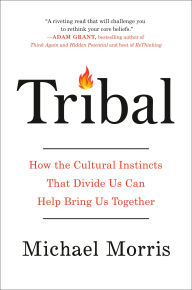
Tribal-How-the-Cultural.pdf
ISBN: 9780735218093 | 336 pages | 9 Mb

- Tribal: How the Cultural Instincts That Divide Us Can Help Bring Us Together
- Michael Morris
- Page: 336
- Format: pdf, ePub, fb2, mobi
- ISBN: 9780735218093
- Publisher: Penguin Publishing Group
Free ebook downloader android Tribal: How the Cultural Instincts That Divide Us Can Help Bring Us Together
A revelatory, paradigm-shifting work from a renowned Columbia professor and “one of the great social and cultural psychologists” (Amy Cuddy) that demystifies our tribal instincts and shows us how to use them to create positive change. Tribalism is our most misunderstood buzzword. We’ve all heard pundits bemoan its rise, and it’s been blamed for everything from political polarization to workplace discrimination. But as acclaimed cultural psychologist and Columbia professor Michael Morris argues, our tribal instincts are humanity’s secret weapon. Ours is the only species that lives in tribes: groups glued together by their distinctive cultures that can grow to a scale far beyond clans and bands. Morris argues that our psychology is wired by evolution in three distinctive ways. First, the peer instinct to conform to what most people do. Second, the hero instinct to give to the group and emulate the most respected. And third, the ancestor instinct to follow the ways of prior generations. These tribal instincts enable us to share knowledge and goals and work as a team to transmit the accumulated pool of cultural knowledge onward to the next generation. Countries, churches, political parties, and companies are tribes, and tribal instincts explain our loyalties to them and the hidden ways that they affect our thoughts, actions, and identities. Rather than deriding tribal impulses for their irrationality, we can recognize them as powerful levers that elevate performance, heal rifts, and set off shockwaves of cultural change. Weaving together deep research, current and historical events, and stories from business and politics, Morris cuts across conventional wisdom to completely reframe how we think about our tribes. Bracing and hopeful, Tribal unlocks the deepest secrets of our psychology and gives us the tools to manage our misunderstood superpower.
The Essential Role of Cultural Broker Programs
culture and the culture of others. Page 8. Bridging the Cultural Divide in Health Care Settings viii.
Second Annual Report to the Congress on United States
--That our support of the South Vietnamese will draw us into wider war. If together and, in so doing, help to bring the world together. NOTES: The
Elegant conservation: reimagining protected area
We have engaged Indigenous members of tribes as our neighbors, for their wisdom of traditional ecological knowledge, and through government-to-government
Tribal: How the Cultural Instincts That Divide Us Can Help
Tribal: How the Cultural Instincts That Divide Us Can Help Bring Us Together TRIBAL · サイズ: · Hardcover.
London: FT and Schroders Business Book of the Year
Profile Books (UK), Yale University Press (USA). Tribal: How the Cultural Instincts That Divide Us Can Help Bring Us Together, Michael Morris
Tribal: How the Cultural Instincts That Divide Us Can Help
But as acclaimed cultural psychologist and Columbia professor Michael Morris argues, our tribal instincts are humanity's secret weapon. Ours is the only species
Tribal Social Instincts and the Cultural Evolution of
However, only in- depth knowledge of how specific institutions work can help avoid good-hearted efforts that inadvertently damage the norms and institutions
The Memetic Tribes Of Culture War 2.0 | by The Stoa
Instead, information dissemination is used in service of tribalism. Anybody can join a memetic tribe and will be supplied with reams of
JP 5-0, Joint Planning
commanders can weave together resources and economic deterrent options accomplished by non-DOD agencies that would support US.